
Leal Pereira
- Country
- Portugal
I develop in my artistic practice a dialogue with the materiality found on everyday bases in the streets, rescuing discarded objects that have lost their original function, but not their value as matter. Through different technologies, the works explore the relationship between the human and the material, reflecting on the dynamics of contemporary society and the impact of our choices.
With an approach that oscillates between the industrial and the organic, I look to transform waste into visceral compositions, where textures, forms, and contrasts invite introspection. Through my work, I seek to offer a renewed perspective on what is often overlooked, evoking the memory and transience of materials while questioning the ephemeral and the permanent in the human experience.
My journey into craft began with a three-year study in welding at IEFP Tomar, where I earned the European Certification in Welding and Welding Engineering Technology, with a focus on MIG/MAG, TIG, and SER techniques. This solid background paved the way for the next two years working on ironwork and conservation and restoration of metal. It was during this period that I discovered a profound passion for building things from scratch and for reviving forgotten or discarded materials.
Welding enter my life to become my go-to technique, not just for its strength but for the creative possibilities it brings, blending precision with instinct. Over time, my practice has expanded to embrace new disciplines, including stonework and engraving. These explorations have opened new creative dimensions, allowing me to merge tradition with experimentation, permanence with transformation.
Artworks
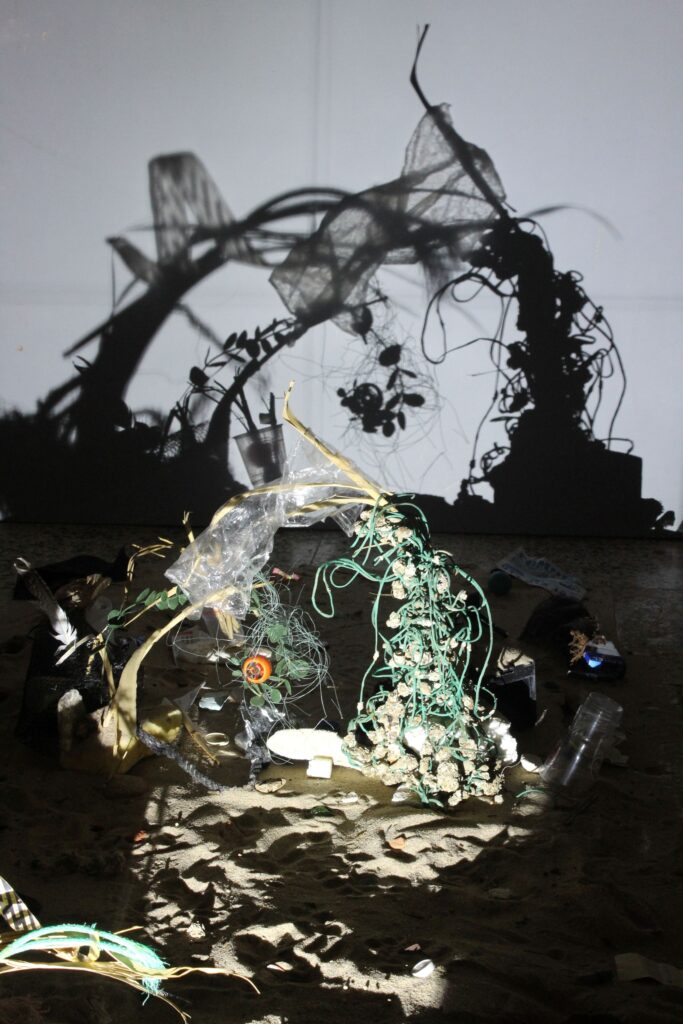
“Reflexos Abrangidos” emerged during my time at the Fine Arts Faculty in Lisboa, where a process of artistic investigation and personal reflection, rooted in a simple, yet profound object, a seashell. For me, the seashell during that time became a symbol of home and it carried echoes of the west coast of Portugal where I was born, a place that I needed to leave behind to carve out my path here in the city. In that sense, the work became an act of holding space for memory, displacement, and resilience.
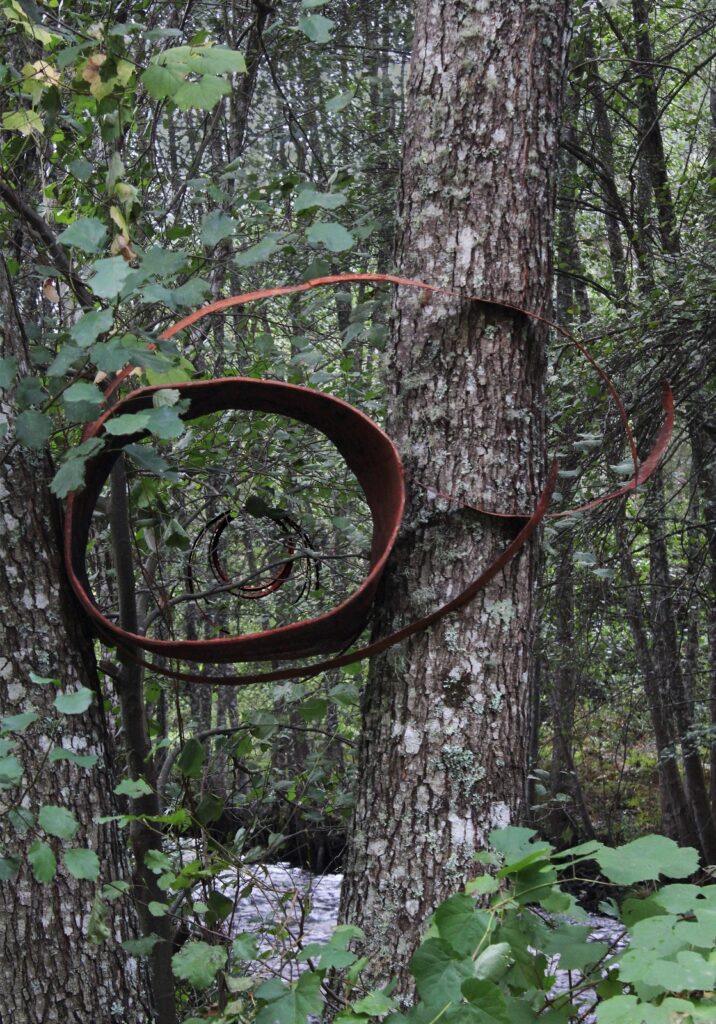
Unknowingly, we place sight above all other senses, mistaking it as a sign of superiority, but in darkness, nature still sees, hears and responds. Its vision expands through other means, guided by sensation rather than form.In exploring the absence of sight, I sought a connection between our way of seeing and nature’s perception. This led me to reflect on the lines that shape the human gaze and how differently nature navigates space, not with defined outlines but through open, fluid, and three-dimensional awareness.Through sensory exercises, I came to understand that without sight, we shift from predator to prey. This realization humbles us. We are not above nature, but part of its cycle, returning to the earth and feeding the growth of new, blooming eyes.
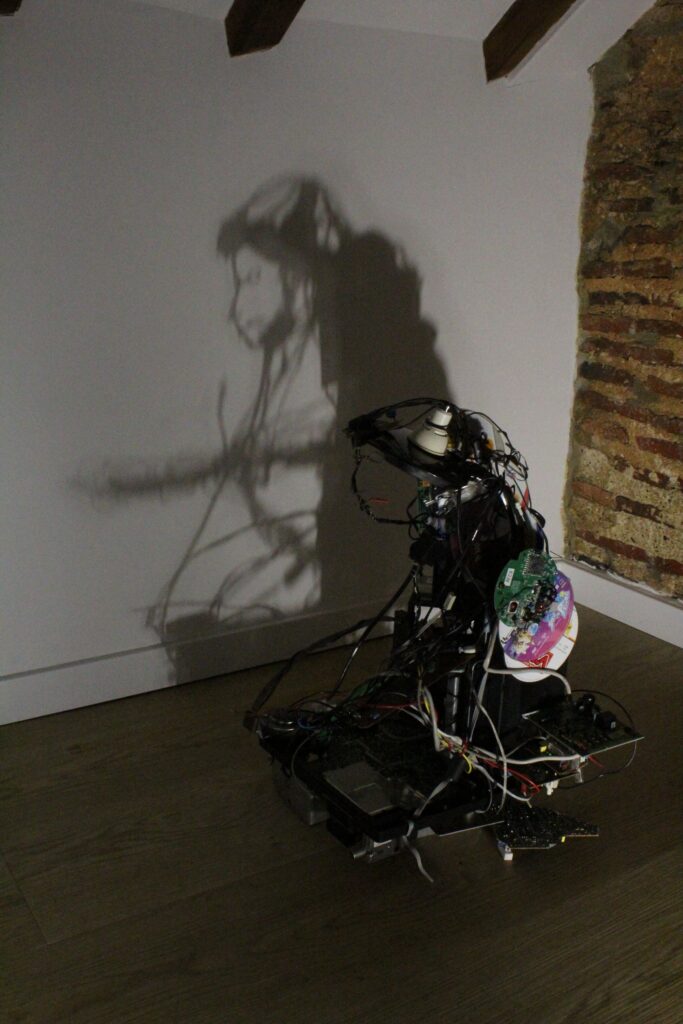
“Escondido à Luz” is an installation composed of recycled electronic materials that cast intriguing shadows on the wall. The work plays with the idea of visibility and concealment, using light as a tool to reveal hidden forms.Within each of us exists a duality between what is visible and what remains hidden in the shadows. Through the work, the viewer is invited to explore new perceptions of discarded objects and their potential for transformation. By incorporating recycled electronic components and using light as a medium, the piece reveals a tension between exposure and concealment, echoing the dynamics of social media, where we appear visible to the world while often remaining closed off within the shadows of four walls.
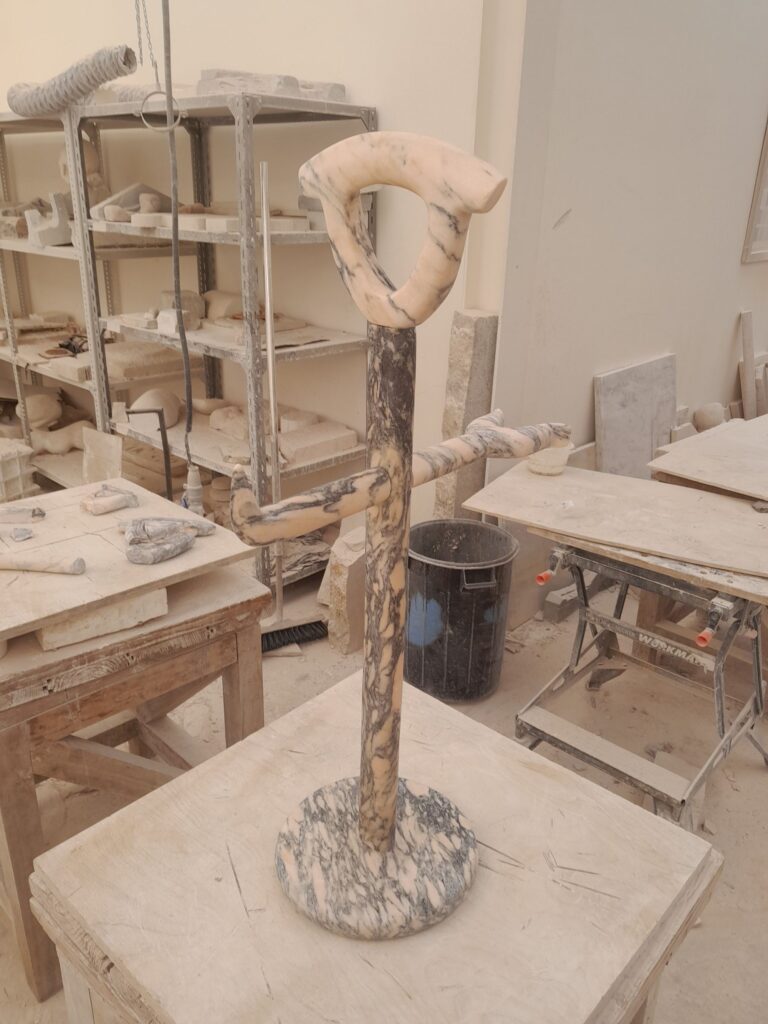
Inspired by the essential tools of glassmaking, this work was created as a beginning of a series of sculptures remarking the glassblower’s work, this one carved from pink marble with gray veins from Estremoz. This noble, national stone evokes both the physical form of the tools and the poetic gesture of the glassblower. Its natural veins recall the slow movement of molten glass, a dance between liquid and solid. The marble’s cold, static nature contrasts with the fluidity of glass, symbolizing a dialogue between permanence and change.These piece do not replicate exactly the tools, but instead translate their memory into stone, serving as archaeological traces of a potentially extinct craft. The marble becomes a metaphor for resistance, the preservation of tradition against the erasure of history.