
Edina Hadzic
- Country
- Bosnia and Herzegovina
I am a fashion and circular economy entrepreneur from Bosnia and Herzegovina, working at the intersection of sustainable design, textile recycling, and social impact.
Through my company, I focus on slow fashion, upcycling, zero-waste practices, and developing new ways to use textile waste and local wool resources that are often overlooked in the region.
What excites me most is building systems that connect sustainability with real economic opportunities for small producers, women, and marginalized communities.
My work combines hands-on production, research, and innovation — from creating small-batch garments and handcrafted textile products to developing ideas for circular manufacturing, material traceability, and sustainable supply chains. I am especially interested in finding practical solutions for industries and communities that are usually invisible in larger innovation ecosystems.
What makes my work unique is the combination of traditional craftsmanship, environmental responsibility, and long-term systemic thinking.
I work primarily with textile craftsmanship, focusing on knitting, upcycling, textile reconstruction, and circular design practices. My work combines traditional handcraft techniques with sustainable production methods, especially through reusing existing materials and transforming textile waste into new products with added value.
I became interested in this craft through a combination of creativity, sustainability, and the need to rethink how fashion and textile production operate today. Over time, what started as a creative practice evolved into a deeper exploration of circular economy principles, ethical production, and material innovation. I have been working in this field for several years, both through product development and by collaborating with small designers, artisans, and local production networks.
My favourite technique is textile upcycling because it allows every material to have a second life while keeping the creative process unpredictable and unique. I also especially enjoy hand knitting and experimenting with combining traditional textile knowledge with contemporary sustainable design approaches.
Artworks
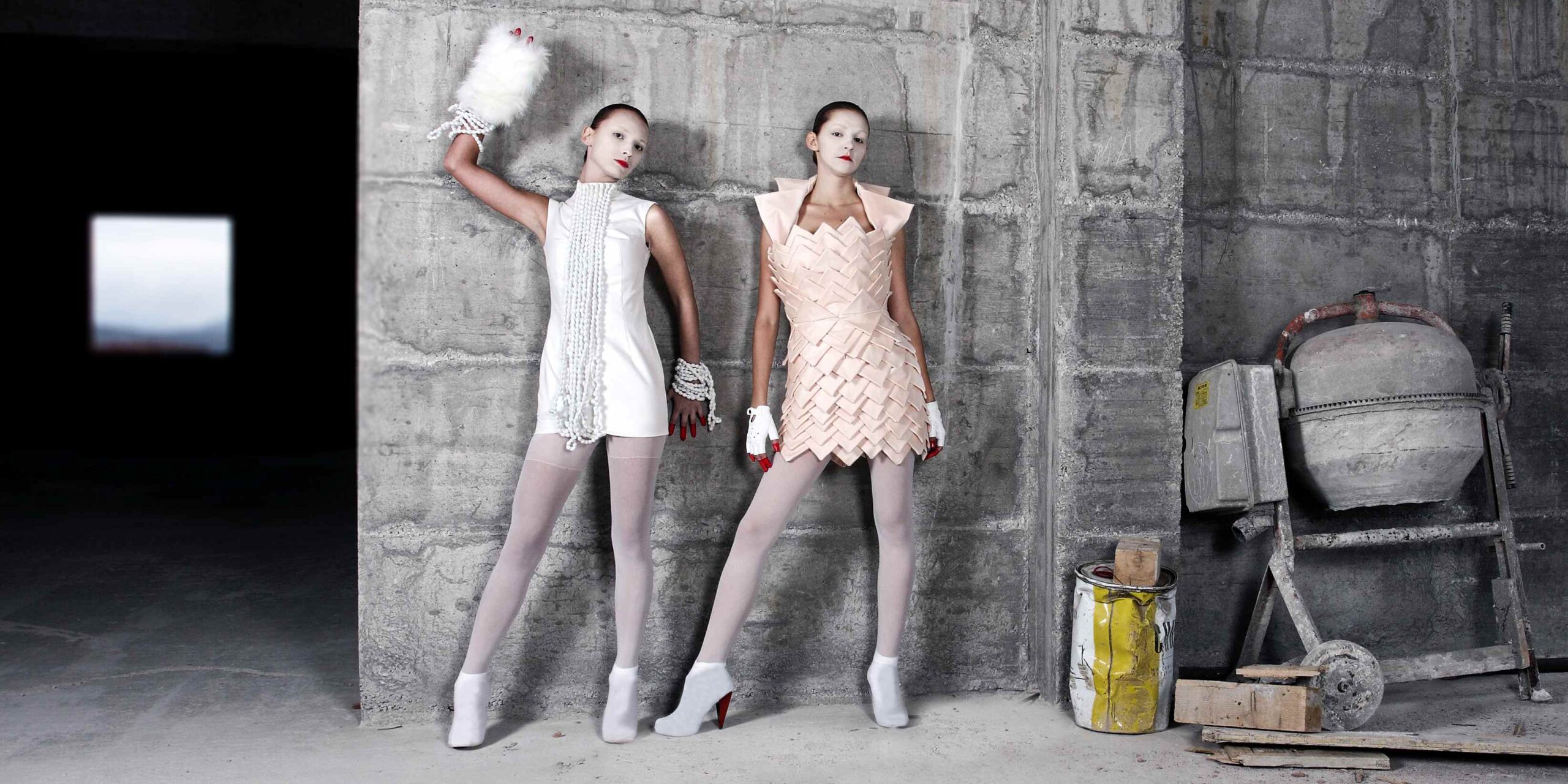
This piece is created using zero-waste principles and deadstock materials, transforming existing textiles into a sculptural monochromatic form. The work explores volume, texture, and silhouette through carefully constructed layers and reconstructed textile elements, giving discarded materials a new visual and functional identity.By working exclusively with existing resources, the piece reflects a circular approach to fashion and highlights the creative potential of textile waste while maintaining a minimal, monochromatic aesthetic.
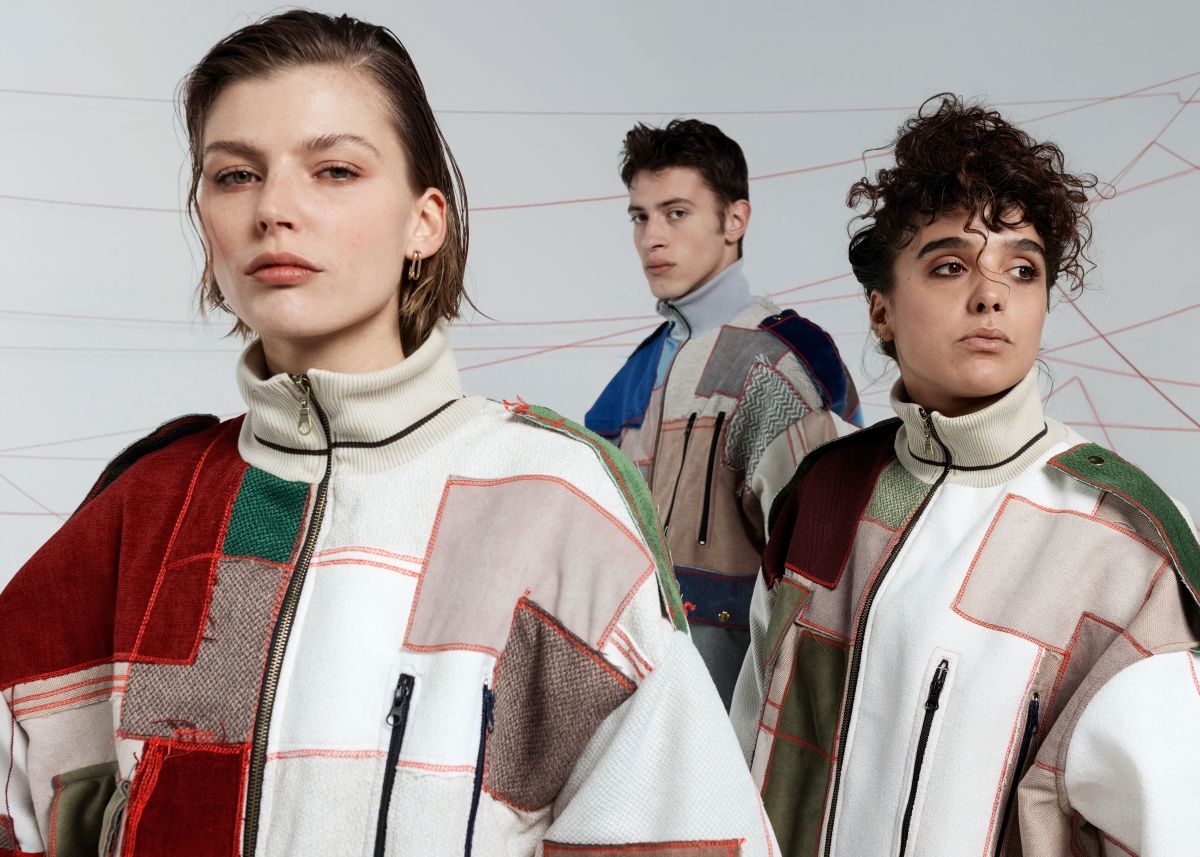
The Eterna project was a collaborative upcycling initiative developed in Bosnia and Herzegovina, bringing together several artists and creatives to create a collective sustainable fashion collection. The entire collection was made from small leftover fabric pieces and textile scraps remaining from production processes, transforming waste materials into unique wearable artworks.Within the project, I was responsible for the development and execution of the pieces, including garment construction, sewing, and handcraft work. The process focused on combining many small fragments of material into cohesive sculptural forms, highlighting both craftsmanship and the creative potential of textile waste through a circular and zero-waste approach.
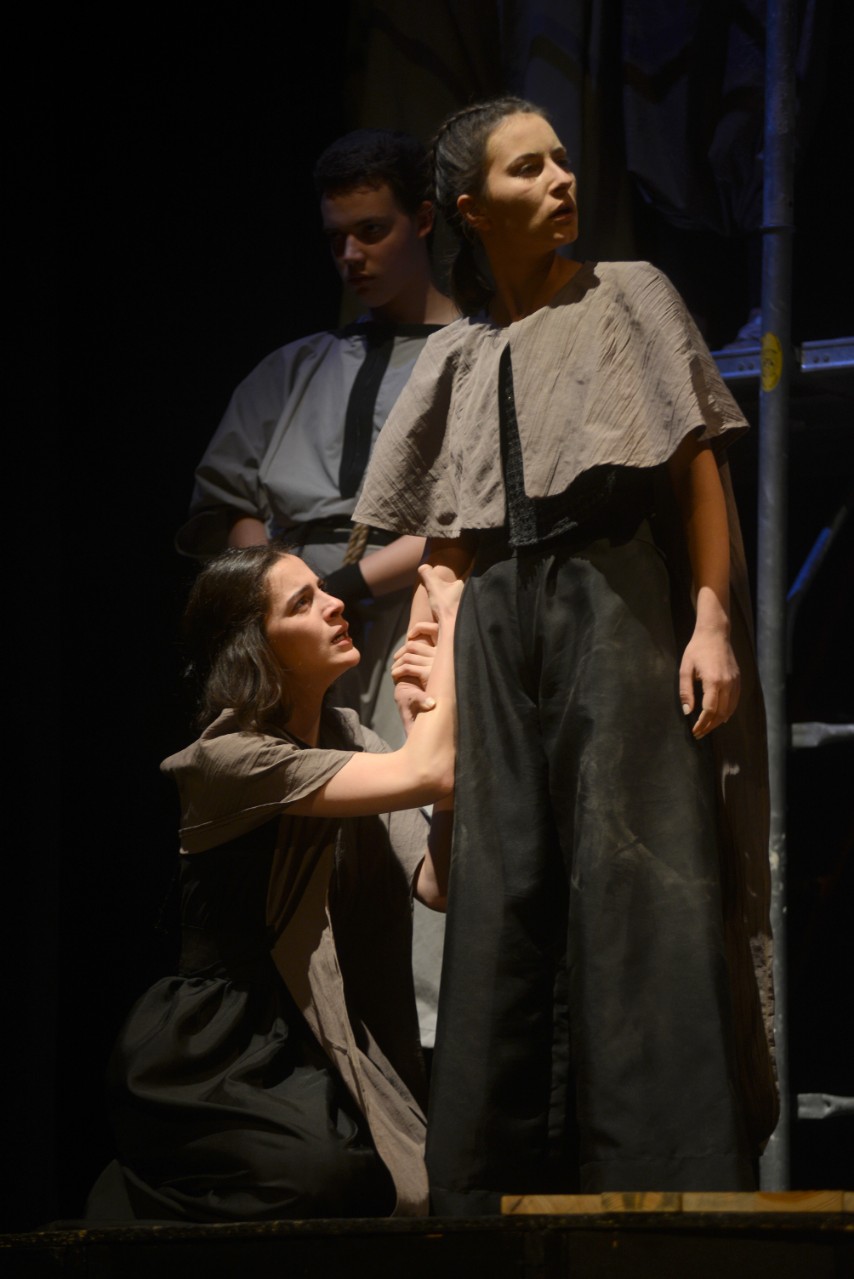
For the theatre production of Antigone, I worked on costume design, garment construction, and handcrafted costume details. The project approached the classical story through a contemporary visual language, reinterpreting a historical and timeless play with modern silhouettes, textures, and materials.The costumes combined theatrical expression with artisanal handwork, creating pieces that connected tradition and contemporary design. The process involved both technical construction and experimental handmade elements, giving the production a strong visual identity while respecting the emotional depth and symbolism of the original play.
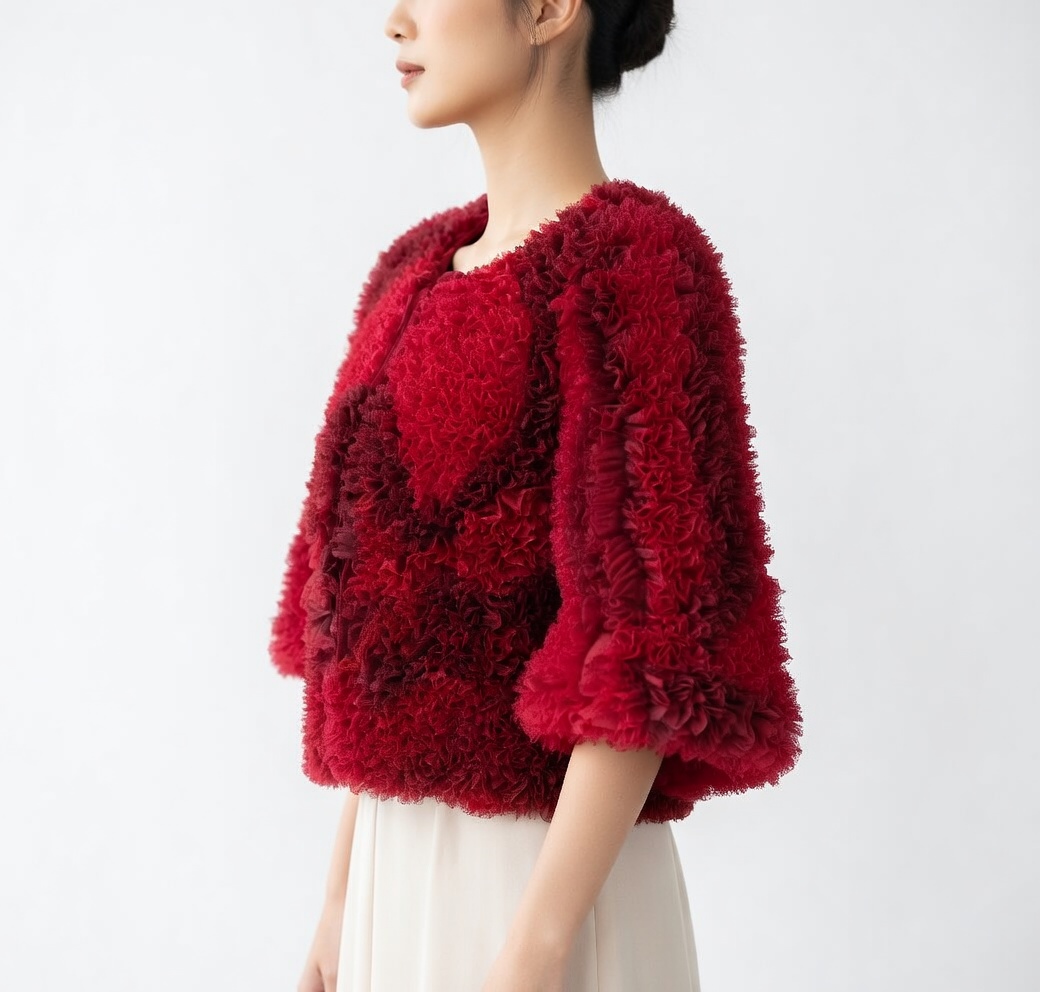
This piece was created from seven meters of lightweight poplin fabric sourced from deadstock and second-hand textiles. As part of a zero-waste approach, the material was first cut into thin strips and then carefully sewn back onto the garment as layered ruffle elements, creating movement, texture, and a sculptural surface.The fabric was hand-dyed, resulting in different tones of red that give the piece depth and an organic visual transition of color. Through reconstruction and manual craftsmanship, the work transforms existing discarded materials into a contemporary textile piece while emphasizing circular design principles and the creative potential of textile waste.