
Guillaume Slizewicz
- City
- Brussels
- Country
- Belgium
I am a designer and digital artist whose work sits at the intersection of technology, the environment, and societal issues. Through my practice, I engage with the evolving dynamics between innovation and sustainability, using technology in poetic, evocative and critical ways. My approach draws connections between ancient craft practices and contemporary digital tools. My works often blend physical materials—metal, wood, and clay—with digital processes like algorithms, artificial intelligence, and computer-aided manufacturing. They connect the past with the future, linking craftsmanship with computational processes.
Either through my own practice or through collaboration, I use craft to emphasize and dramatize my pieces and artworks. In recent years, I worked with wood carver Thomas Rauch on sculptures representing the evolution of Austrian forests (Wolpertinger), where shou sugi ban techniques made environmental data tangible. I collaborated with Ferenc Halmos and Lazlo Ceramics on a ceramic installation revisiting the history of an Art Nouveau house in Romania, merging historical narratives with contemporary ceramic processes.
My woodworking explores new CNC-enabled joinery techniques using custom-designed rigs, pushing beyond standard digital fabrication. With Studio Minimètre, I expanded the possibilities of 3D-printed ceramics to create innovative door hardware that challenges functional design conventions. Most recently, I revisited the ancient art of mosaic with mosaicist Françoise Lombaers, investigating how algorithms could generate organic patterns from square tesserae.
For me, craft practices not only amplify discourse but serve as starting points for creating new relationships between tradition, technology, and collaborative making.
Artworks
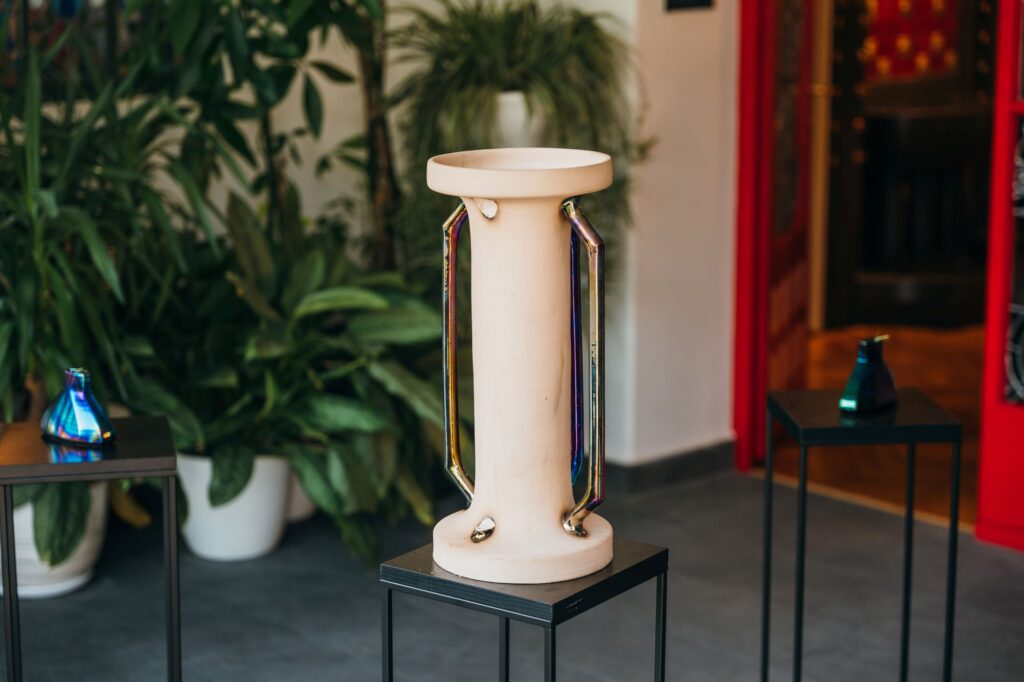
All I can see are ghosts, presented in Darvas House in June 2025. A design research on heritage, ceramics and craftmanship in the city of Oradea. This installation is one of remembrance, of meditation, on the places that stay when people are killed or displaced. Support by Réseau Art Nouveau, Casa Darvas House, Art as a New Eutopia, Creative Europe, Oradea Heritage, Prin Banat
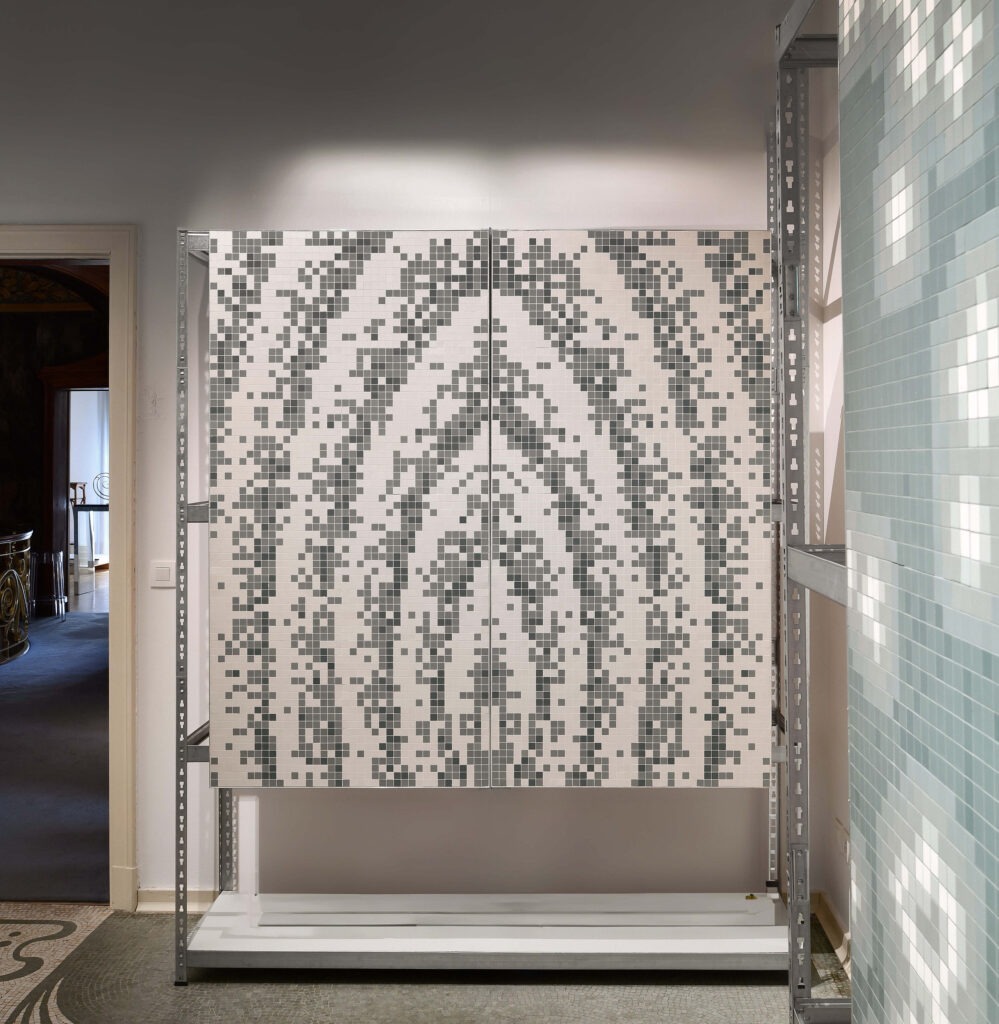
The Duo en Resonances collaboration with Françoise Lombaers centers on process. To work at scale, Françoise developed a system using square tesserae, drawing patterns from textile and ceramic traditions. Together they wrote algorithms that respect the square’s constraint while generating new forms. Each algorithm follows its own logic: mycelial branching, minimum spanning trees, cellular evolution, wave propagation. The research focused on representing movement through fixed geometry—finding where mathematical rules yield organic behavior. Support by Wallonie Design, Fonds SofinaBoël pour l’Education et le Talent, the Fédération Wallonie- Bruxelles, Maison Hannon.
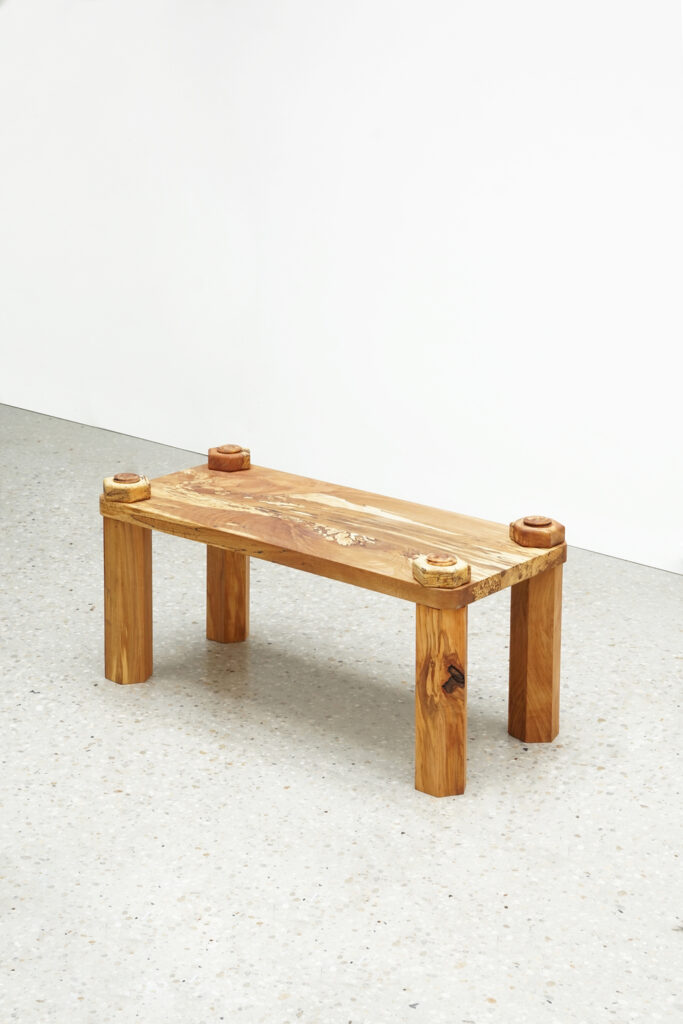
UNO is created from spalted beech wood, sourced from the Brussels region, this piece draws its design inspiration from the ESP-32, an iconic electronic component, modeled, scaled up fifteen times and cut with a precise CNC Machine to achieve its distinctive shape. This table is made from spalted beechwood, a type of wood generally bypassed by industrial processes due to its irregular patterns. By embracing this material, UNO reveals the marble-like patterns inherent to the wood.
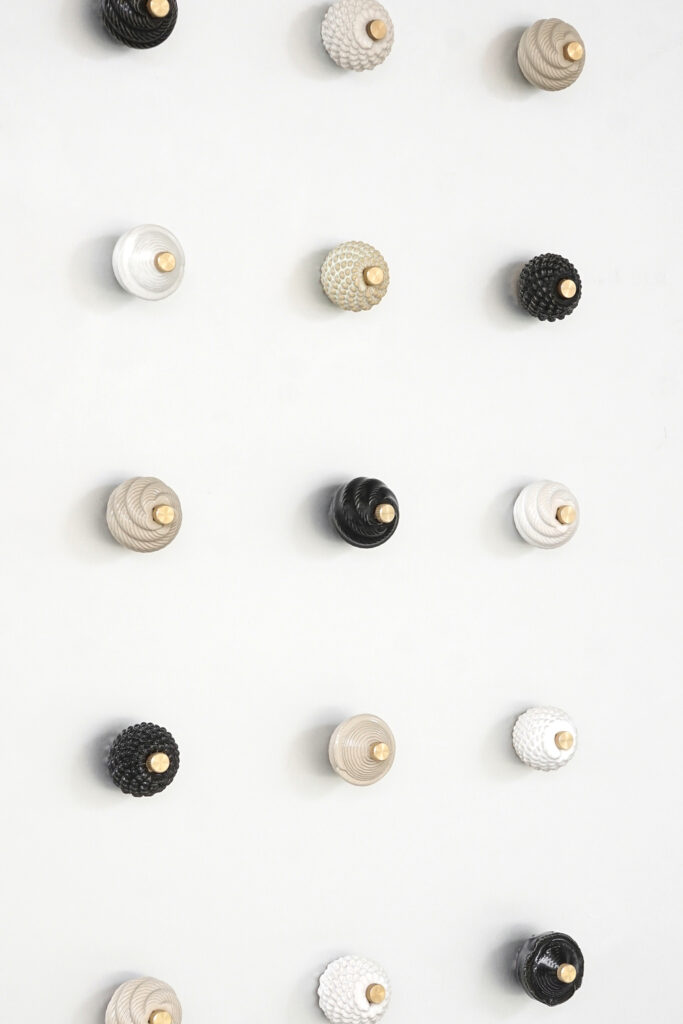
This debut collection showcases three designs: star, coral, and spiral, available in black, white, and transparent.These door button handles are the results of a the Layramics project, a collaboration with Studio Minimètre which explores the possibilities of merging algorithmically generated design with 3D printed ceramics. We had the chance to meet thanks to MAD, Home of Creators .This project was co-funded by the European Union’s Single Market Programme.